Latest Promo at LHN Food Chain
Yes! We are having a promo for sales as well as rental and also and rent to buy scheme. Do contact us for latest promo.
B2 Food Factory at Tuas
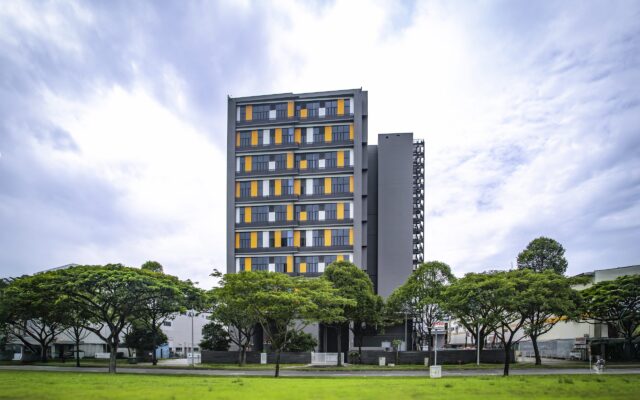
LHN Food Chain Food Factory is a new Urban Space For Modern Industrial Space for Singapore Food Industry. Amidst this emerging market scenario, LHN Group launches the LHN Food Chain Food Factory, an extension of the new industry space, created to attract modern food-oriented activity in Singapore to facilitate specialised industrial space. With increasing demand for food factory space, companies are in need of the operational efficiency, strategic linkages and long-term investment potential of such facilities.
LHN Food Chain Food Factory stands out as an industrial facility, whose practical designs are also accessible and functional. With the project now finished and TOP received, buyers and renters have at their disposal, in actual units, a real understanding about how their development might be required by a variety of business needs. In other words we cannot speak with as much authority of the strategic location of LHN Food Chain Food Factory. The performance of an industrial property is closely related to its location, especially in a food factory and there are no industrial assets without location plays a very powerful role. And logistics, access and connectivity and proximity to suppliers and customers help make a world of difference.
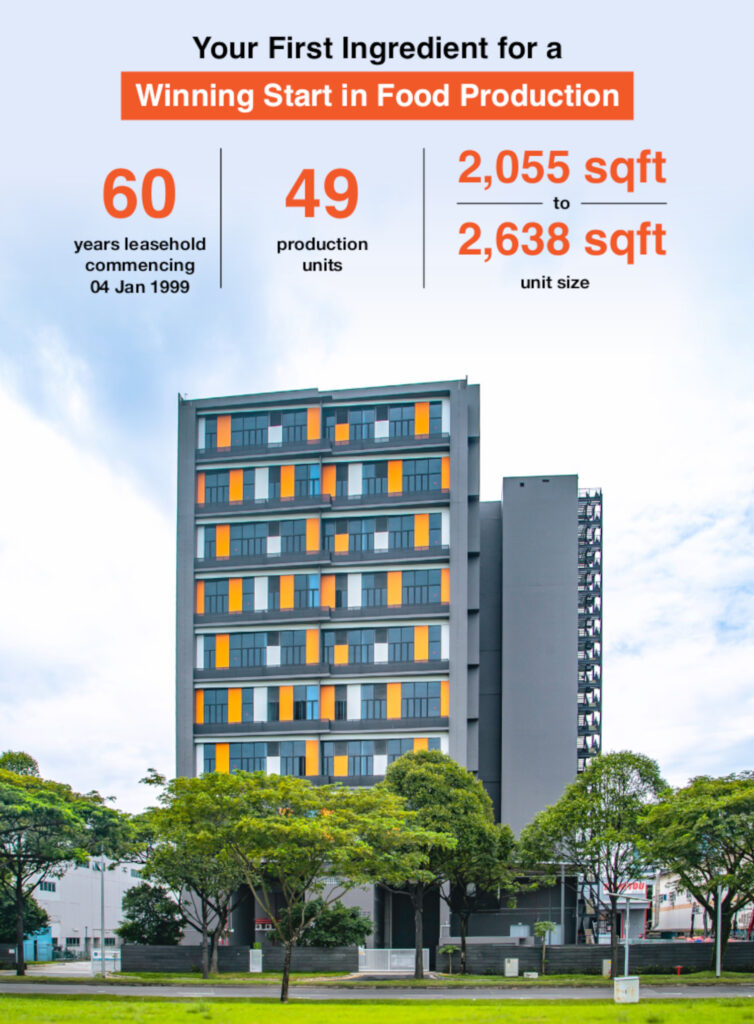
The versatility of LHN Food Chain Food Factory is one of its core advantages. The growth could also easily extend to diverse food-related operations, depending on the need to run operations appropriately and for regulatory clearance. Food production companies that own and package products will utilize the units. The development could also benefit catering companies that require central kitchen setups for large-scale meal prep and distribution. The industrial configuration of the development also could serve bakery operators, frozen food distributors, beverage preparation businesses and food processing companies. The growth of cloud kitchens, and online food businesses has generated extra demand for functional food factory areas. A multitude of online food brands are run by businesses often that consolidate production at their industrial facilities which means increased efficiency and lowers operating costs.
When an operator knows how to plan and work with a food factory, they will be able to deliver quality yet consistent food. Cold storage support enterprises could also benefit from those changes. With business diversification in food distribution networks businesses need infrastructure that unites the storage, preparation and transportation facilities, so that they perform in a single operational environment. Industrial food factory space has the ability to be adapted to serve business operations. Owners can design production zones, reserves, preparation areas, and staff facilities and setup of equipment that is efficient according to operating environment.
Industrial assets continue to be an important asset class in Singapore’s property market. In particular, food-factory developments might well receive more attention as they involve tight supply and operational specialities like that which only a small number of other industries have. Industrial space concerning food typically serves businesses that are still in operation in an ongoing process. Unlike many conventional industries, which experience a wide variety of changes with change in the economy’s cycle, food production and distribution are still essential industries. Stable long-term demand creates this demand to own suitable operational facilities.
TOP food factory developments might attract new investors interested in industrial assets holding rental potential. Food facilities prefer operational-ready premises and are in developed industrial zones. Well-planned food factory developments may thus sustain tenant attraction over time. The expansion of the digitalisation of the food industry also enables future industrial demand. Online food delivery, meal preparation and food export will continue to grow, and as businesses continue to need bigger and more efficient production facilities. Singapore’s limited industrial land supply bolsters the attractiveness of specialised industrial development as well.
Food factory projects are governed by certain infrastructural and operational regulations, hence suitable developments are limited within the market. Industrial segments with key business sectors serving as long-term investors may provide better resilience and sustainability than speculative sectors within the property market.
LHN Food Chain is located at 55 Tuas South Avenue 1 Singapore 637462in an existing industrial environment in the Singapore area where food production and distribution plays is very well known in an established industrial environment where the activity of the food production and distribution is already well within an established industrial infrastructure, in this instance. Located within Singapore’s industrial framework enables businesses to leverage existing infrastructure and better process flow and workflow.
Many food manufacturers will need expressways, delivery routes, and industrial assistance services ready at their disposal. A well-connected location contributes to minimize transportation delays and provide improved supply chain efficiencies required to manage perishable products. Accessibility for staff convenience and flexibility is also supported by the development. Easily commutable access is necessary for workers working in food production, catering, central kitchens and food preparation facilities. Industrial projects linked to transport networks often gain stronger long-term business demand.
A strategic industrial location also has the benefit of business scalability. Food operators that start small with a few production facilities can soon expand production to meet demand. For businesses to be able to grow without sacrificing operational efficiency, a suitable industrial development that is well situated must be chosen.
Food in Singapore has changed dramatically in the last ten years. In addition to the traditional restaurants and retail food businesses, the market now also counts cloud kitchens, online catering services, ready-to-eat meal preparation companies, food technology start-ups and regional food export businesses. This evolution has resulted in increased demand for focused food factory buildings. Food operators’ needs are growing in relation to industrial spaces that reinforce hygiene requirements, food preparation processes, cold storage integration facilities, and logistics coordination. These are the sorts of modern industrial requirements that LHN Food Chain Food Factory is positioned to address.
The proliferation of food delivery services has also altered the way food businesses are run. Increasingly, companies are concentrating production at their food factories and distributing products to many retail locations or delivery vehicles. This operational model stresses the need for efficient production facilities, practical layouts, and loading accessibility systems. Moreover, Singapore’s focus on food security and the local production of food will in turn contribute to maintaining demand for food industry spaces over the long term.
Government policies to promote local production and development of food have opened up new directions for those who focus on food production, processing, and packaging. With less industrial land available in Singapore, finished food factory developments may be more valuable over the longer term. In developed areas, businesses looking for operational ready facilities mostly tend to prefer those developments which are completed. They can plan renovation works and operational setup to arrive with little difficulty.
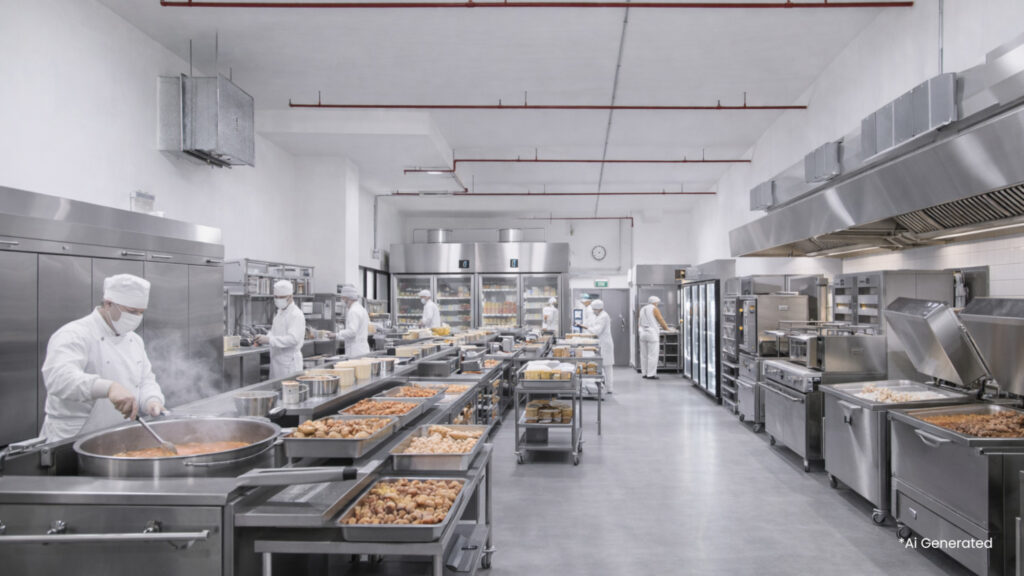
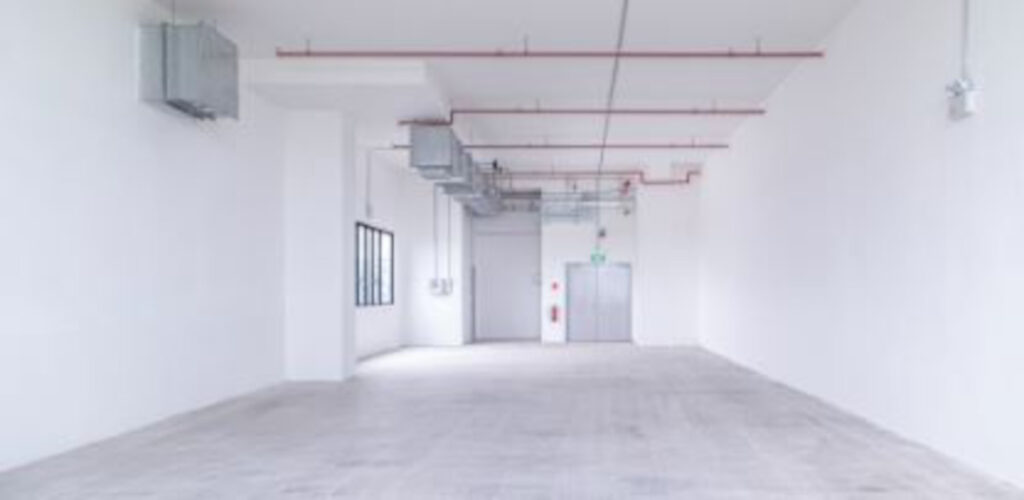
One great advantage of LHN Food Chain Food Factory is that the project has already reached TOP status. Instead of relying strictly on artist impressions or construction stage marketing materials, buyers can now view actual completed units. The actuality of the units provide buyers a clearer view of ceiling height, layout practicality, loading access to the factory floor and build quality overall. These physical factors are of great importance for buyers of industrial property since they relate to the actual operational efficiency.
Business owners can also accurately estimate renovation costs and the overall costs of construction when they view completed units. This will enable easier visualisations of equipment placement, planning of work and storage in a complete environment. For investors, a finished project minimizes project uncertainty. Investors can do the actual development assessment before making a purchase decision rather than speculate about the actual construction outcome. That transparency often leads to greater confidence from buyers in the process. Completed industrial developments can also offer operational readiness more quickly. Businesses that want to grow or relocate can get a jump start with planning the renovation and setting up when they aren’t buying units in projects still in progress.
Today’s food factory developments do not include only the warehouse-like industrial buildings. The modern day business needs to operate, maintain hygiene, manage personnel movement and logistics work processes. LHN Food Chain Food Factory is built working in practical aspects of functionality.
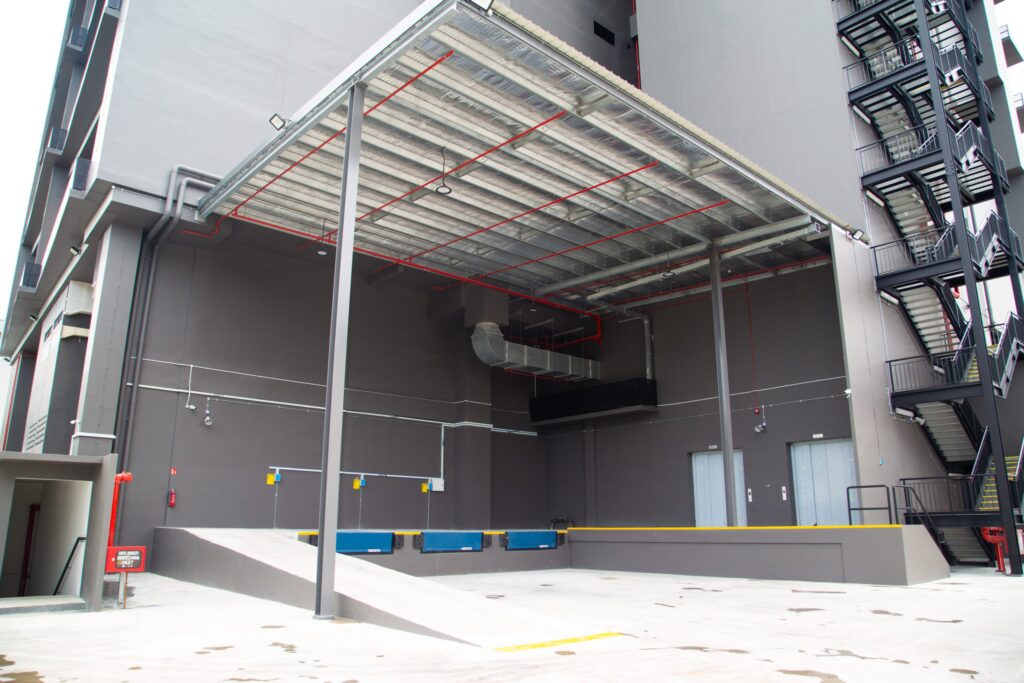
Typical elements of food factory developments would be loading access, cargo lift support, high ceilings, utility infrastructure, industrial features, and practical layouts. The efficiency of loading and unloading is vital, particularly for food processors managing the flow of feedstock, packaging material and daily delivery process. An appropriate loading facility is essential for minimizing operational timescales as it prevents downtime and streamlines the workflow and improves management of workflow. A cargo lift access is another key aspect to consider for development on several rungs on the ladder in a multi-level food factory. Enterprises and suppliers carrying heavy freight, raw materials and the like, or materials for production require a dependable infrastructure.
Operational flexibility is also growing more and more emphasized in the latest industrial development. Enterprises can change, and over time changes in how producers’ work are done or the arrangement of storage could be necessary for businesses to adapt. Functional layouts offer more flexible structures that change with new processes and operations. Visibility and sustainability of industrial developments can also affect business perception. For the customers and suppliers and operational partners which visit the premises, a cleaner industrial environment that resembles modernism could be preferable.
As consumers habits and technology are changing, Singapore’s food industry is evolving. The focus is on automation, production efficiency, scalability, and the more-advanced digitalization. Food factory developments are still extremely relevant because they promote centralised operational models. Rather than depending only on single stores for food shopping, the industry now has expanded production in industrial plants which can be used to produce the products, prepped for retail release by numerous retail outlets. This is a better approach of operating model where you get more consistency, quicker, and scalable to your business. It also permits companies to operate labour allocation and stock control more cost-effectively. The burgeoning food exports in the region would also help to support food production facilities in Singapore.
Companies seeking to spread products across Southeast Asia may need central manufacturing and packaging operations in Singapore’s stable economic climate. Commercial demand is also growing amid an increase in food innovation and investments in food technology. In the context of alternative foods, food research and specialised food manufacturing startups that are involved with food production, there is growing demand for suitable industrial spaces to allow for operational experimentation and production scaling. Industrial food is an essential component of Singapore’s food production infrastructure, as consumer demand for convenience and food delivery continues to rise.
LHN Food Chain Food Factory is a modern industrial development that is fully capable of accommodating Singapore’s changing food production, distribution and hospitality industries. Based on its completed status – with actual units currently available for inspection – investors and buyers can evaluate the functionality, quality and operations of the development. The strategically situated location, operational-optimized industrial layout and capability to accommodate different food-based operations make it an appealing destination for business owners wishing to run a production space. From the central kitchen and catering sectors to food manufacturing and cloud kitchen operators, the development is diverse enough to cater to various industrial applications.
As Singapore fortifies its food and industrial ecosystems, specialised food factory developments may see an increasing demand from end-users and investors. For enterprises looking to expand in years to come; or when seeking to gain a foothold for industrial real estate investment, LHN Food Chain Food Factory might be well worth exploring in the Singapore industrial property market.
No. LHN Food Chain is licensed as a Food Factory for food production.
Yes, you can. But subject to availability.
LPG Piping. Capped off at unit entrance
There’s a dedicated refuse chute in each unit
Yes, at level 1
Yes there is.
No. There are no ramp up. Loading / unloading only at level 1
Can. Only at level 1
| Project Name | LHN Food Chain |
| Developer | LHN Group |
| Address | 55 Tuas South Avenue 1 637462 |
| Tenure | 60 yrs from 4/1/1999 |
| Zoning | B2 Food Factory |
| Plot Ratio | 2.5 |
| Total Units | 49 |
| Ceiling Heights: | Level 1: 10.5m Level 2: 6m level 3 to 9: 5m |
| Power Supply | 159A 3 Phase |
| TOP | 2026 |

Yes! We are having a promo for sales as well as rental and also and rent to buy scheme. Do contact us for latest promo.

